
How to reduce staff costs in a restaurant: 7 practical ways
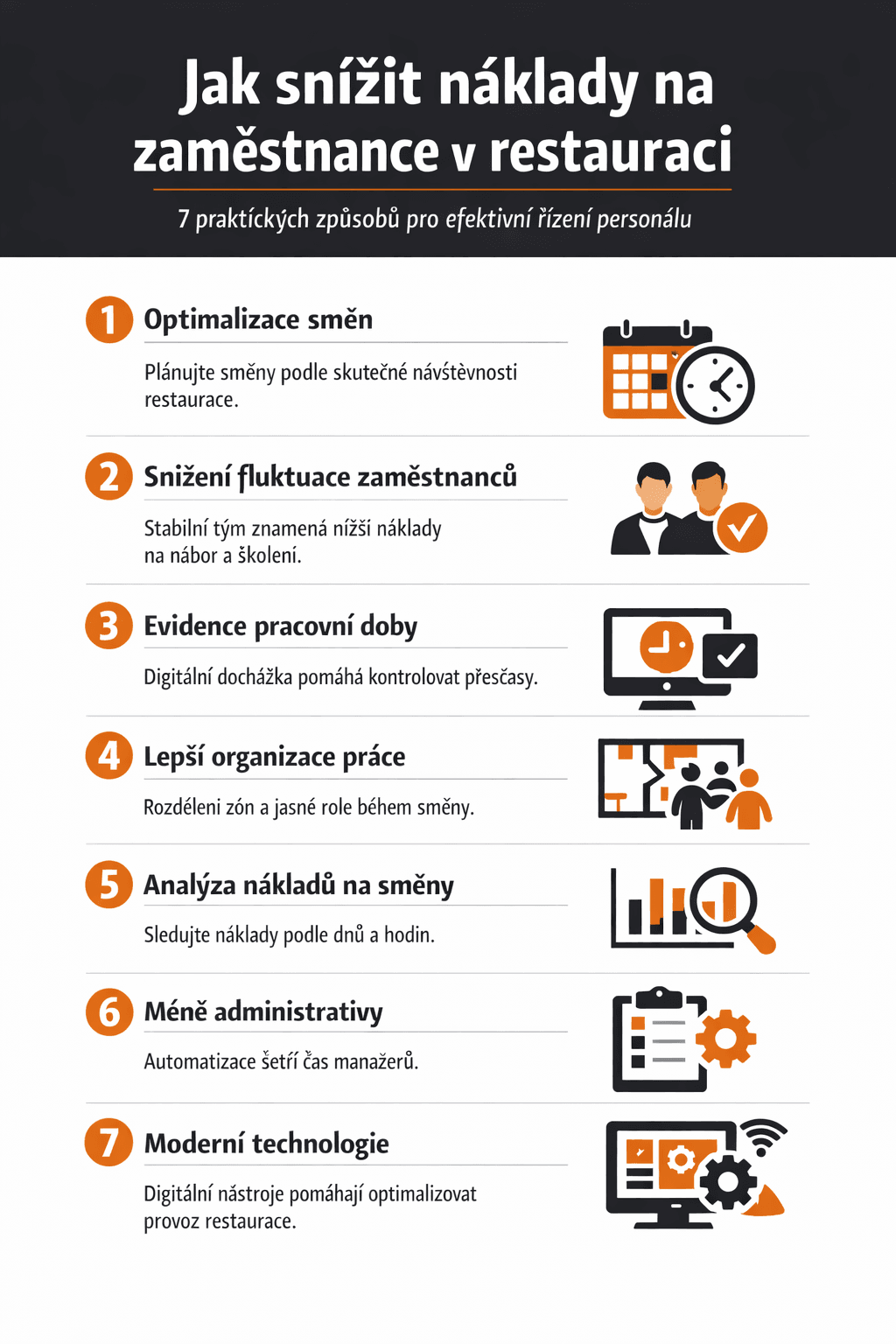
How to Reduce Labor Costs in a Restaurant: 7 Practical Ways
Labor costs are one of the biggest expenses in any restaurant.
At the same time, cutting staff blindly often leads to worse service, lower guest satisfaction, and ultimately declining revenue.
Reducing labor costs in a restaurant is not about cutting people.
It is about building a system where the team works efficiently, processes are optimized, and every hour is used effectively.
Why Labor Costs Get Out of Control
In many restaurants, labor costs grow gradually and unnoticed.
Typical reasons:
- inefficient scheduling
- overstaffing during low-demand periods
- lack of clear roles
- manual processes that consume time
- no connection between reservations and staffing
As a result:
- staff costs increase
- productivity decreases
- management loses control over efficiency
Without a system, labor costs become unpredictable.
What “Reducing Labor Costs” Really Means
Reducing costs does not mean reducing quality.
It means:
- aligning staffing with real demand
- eliminating inefficiencies
- improving productivity per employee
- using data for decision-making
The goal is not fewer employees, but better use of resources.
1. Align Staff Scheduling with Real Demand
One of the biggest mistakes is using fixed schedules.
Instead, use:
- reservation data
- historical traffic
- peak hour analysis
This allows you to:
- avoid overstaffing
- ensure coverage during busy times
- balance workload
Smart scheduling alone can significantly reduce costs.
2. Connect Reservations with Operations
Reservations are not just for guests.
They provide:
- demand forecasting
- workload planning
- staffing optimization
When reservations are integrated into your system, you can plan shifts based on real data, not assumptions.
3. Eliminate Time-Consuming Manual Tasks
Many restaurants still rely on manual processes:
- phone reservations
- paper-based workflows
- repetitive administrative tasks
Automation helps:
- save staff time
- reduce errors
- increase efficiency
Less manual work means lower hidden labor costs.
4. Optimize Roles and Responsibilities
Unclear roles create inefficiency.
Common problems:
- overlapping responsibilities
- idle time during shifts
- lack of accountability
Clear structure ensures:
- better coordination
- faster service
- higher productivity
5. Use Technology to Support Staff
Technology should not replace staff—it should support them.
Examples:
- reservation systems
- POS integrations
- kitchen management tools
These tools:
- reduce workload
- speed up operations
- improve accuracy
Systems like RestoCraft connect reservations, data, and operations into one ecosystem, improving both efficiency and cost control.
6. Monitor Key Metrics
You cannot manage what you do not measure.
Important metrics:
- labor cost percentage
- revenue per employee
- reservations vs. staff ratio
- peak vs. off-peak efficiency
Regular monitoring allows quick adjustments.
7. Focus on Productivity, Not Cuts
The biggest mistake is focusing only on cost reduction.
Instead, focus on:
- output per employee
- service quality
- operational efficiency
A productive team costs less per result.
Example: Cost Optimization in Practice
Restaurant before optimization:
- overstaffed during slow hours
- manual processes
- no data-driven decisions
After implementing a system:
- dynamic scheduling
- integrated reservations
- automated workflows
- clear performance metrics
Result:
- lower labor costs
- higher efficiency
- improved guest experience
30-Day Plan to Reduce Labor Costs
Week 1: Analyze current staffing and costs
Week 2: Implement smarter scheduling
Week 3: Automate key processes
Week 4: Track metrics and optimize
This creates a foundation for long-term efficiency.
Labor Cost Optimization as a Competitive Advantage
Most restaurants try to cut costs reactively.
Strong businesses:
- build systems
- use data
- optimize continuously
- align operations with demand
Reducing labor costs is not about saving money in the short term.
It is about building a more efficient and scalable restaurant.
Frequently Asked Questions
How can a restaurant reduce labor costs without cutting staff?
By improving scheduling, automating processes, and increasing productivity.
What is the biggest driver of high labor costs?
Inefficient scheduling and lack of demand-based planning.
Do reservation systems help reduce costs?
Yes. They provide data for forecasting and staffing optimization.
Is automation expensive?
Modern tools are often cost-effective and quickly pay for themselves through efficiency gains.
How quickly can results be seen?
Initial improvements can appear within a few weeks, with significant impact over 1–3 months.