


Uncategorized
Restaurant Loyalty Program: Why It Increases Guest Retention
Restaurant Loyalty Program: How to Increase Guest Retention by Up to 30%
Restaurant Loyalty Program: Why It Increases Guest Retention
A restaurant loyalty program is one of the most effective tools today for increasing guest retention and building long-term relationships—without relying on constant discounts.
Most restaurants understand that a loyalty program can help retain guests.
However, far fewer truly understand how it influences guest behavior in practice—when a guest returns, why they return, and what determines whether they remember the restaurant.
These details are what decide whether a loyalty program becomes a powerful tool—or just “another marketing feature.”
What Actually Changes When a Restaurant Introduces a Loyalty Program
In practice, it’s not just the numbers that change.
The way guests make decisions changes.
A guest who knows that:
- their visit is tracked,
- they can see their rewards,
- they can gain something on their next visit,
behaves differently than a guest who leaves anonymously.
Repeat Visits Are Not a Coincidence
One of the most common mistakes is assuming that good food alone guarantees return visits.
The reality is different.
A guest returns when:
- they remember the restaurant at the right moment,
- they receive a small incentive to come back,
- they feel that their return is expected.
This is where a loyalty program starts to work in practice.
How a Loyalty Program Influences Guest Behavior
The guest plans their return
Points, cashback, or simple rewards create a natural expectation of a future visit—not as an obligation, but as an opportunity.
The guest perceives continuity
The restaurant is no longer “just one of many places.”
It becomes a relationship, not a one-time experience.
The guest responds to subtle reminders
A gentle follow-up after a longer break is often enough to bring a guest back—without discounts or pressure.
Guest Retention as an Ongoing Process
Guest retention is not a one-time campaign.
It’s a set of small signals that together create a reason to return.
In practice, it works best to:
- reward visit frequency, not just spending,
- keep rules simple,
- avoid overwhelming guests with information.
The less the guest has to think, the better the system works.
Points, Cashback, and Small Incentives
Real-world experience shows that:
- points for visits encourage consistency,
- cashback creates immediate perceived value,
- small personalized rewards strengthen the relationship.
It’s not about the size of the reward—it’s about timing and simplicity.
The Loyalty Program Must Be Part of a System
A loyalty program works best when it is:
- connected to the restaurant’s website,
- integrated with reservations,
- based on real guest data.
Disconnected tools create chaos.
An integrated solution allows you to track the full journey—from the first visit to the return.
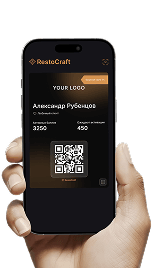
This approach is implemented by platforms like RestoCraft, where the loyalty program is not a standalone feature, but a natural part of the overall guest experience.
Restaurant Marketing Without Pressure or Discounts
A loyalty program:
- does not replace quality,
- does not force guests to return,
- does not replace service.
It is a subtle tool that:
- reminds guests of the restaurant at the right moment,
- supports natural decision-making,
- builds long-term relationships without discount dependency.
Frequently Asked Questions
How does a loyalty program influence guest behavior?
It creates a subtle incentive to return.
Guests recognize the value of their visits and are more likely to come back—without needing discounts.
What works better: points or cashback?
Both work if they are simple.
Points support regular visits, while cashback provides an immediate sense of reward.
Timing matters more than the reward size.
How often should guests receive reminders?
Only at natural moments—for example, after a longer break between visits.
Too frequent communication reduces effectiveness and can feel intrusive.
Why doesn’t a loyalty program work when it’s disconnected from operations?
Because it doesn’t use complete guest behavior data.
For real impact, it must be integrated with the website, reservations, and visit data.
Can a loyalty program increase retention without discounts?
Yes.
A well-designed loyalty program strengthens long-term relationships and reduces reliance on discounts, which often devalue the brand.
Practical Takeaway
A digital restaurant loyalty program increases repeat visits when it is:
- simple,
- unobtrusive,
- integrated into operations,
- focused on guest behavior—not just metrics.
It’s not about how many points a guest earns.
It’s about whether they have a reason to come back.